
Source: Michigan News
Madeline Walker Miller
Madeline Walker Miller
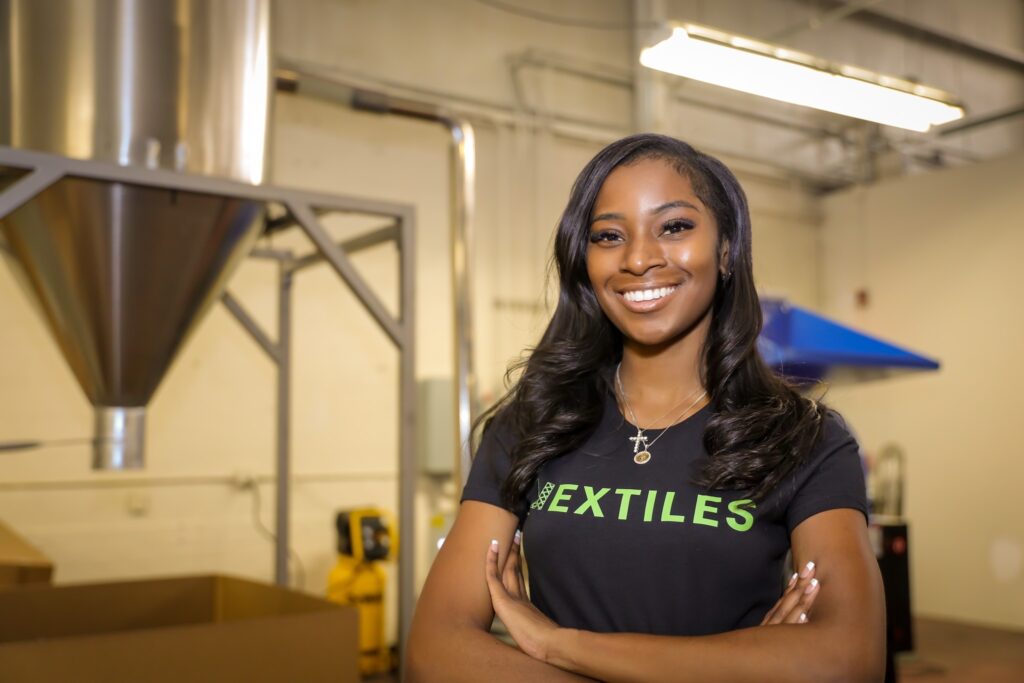
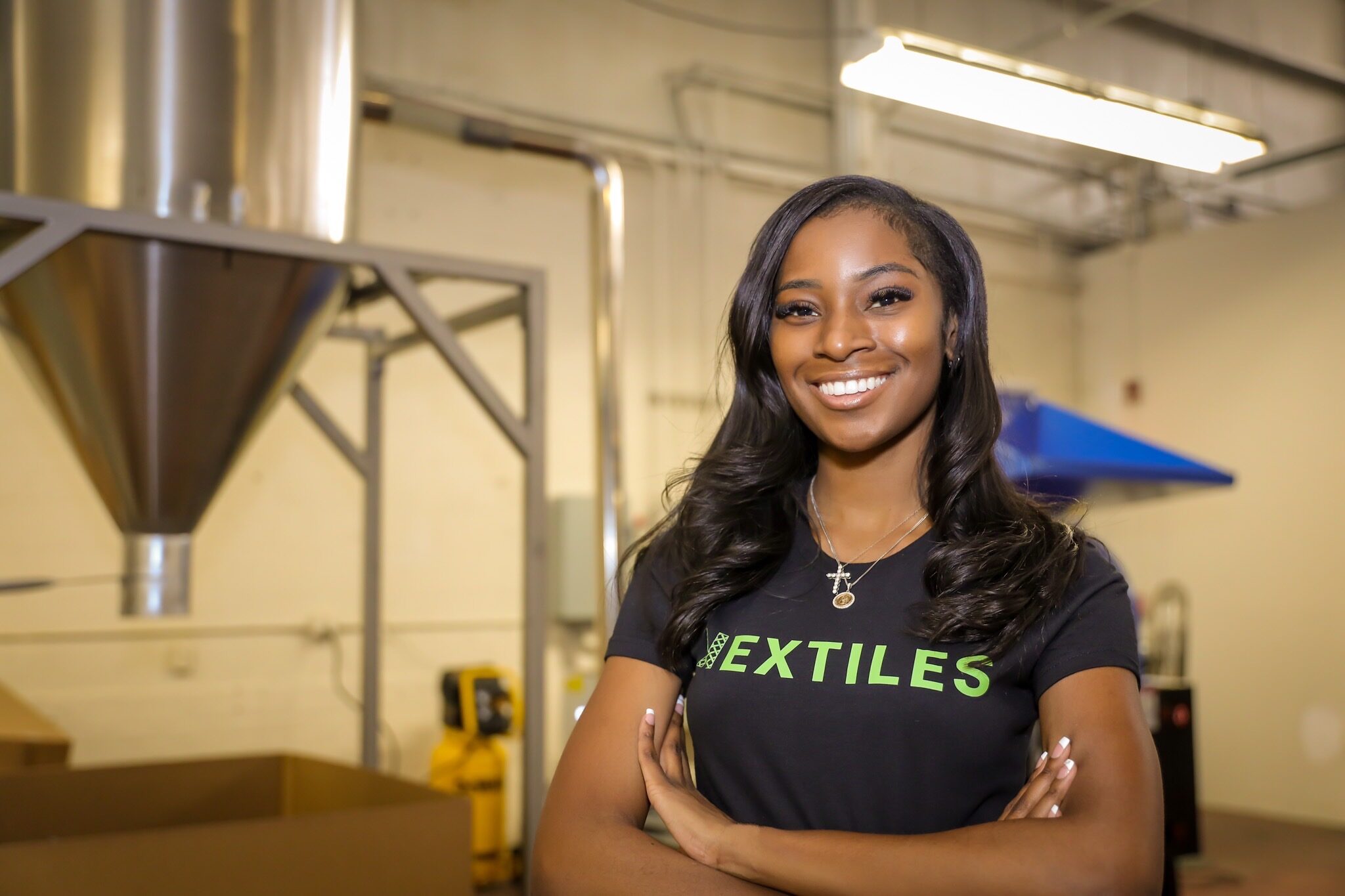
As the daughter of an energy efficiency company founder, Madeline Walker Miller sought her mom’s advice when she had the idea for NexTiles, a textile recycling company, during the pandemic.
Her mother, Carla Walker-Miller, the founder and CEO of Walker-Miller Energy Services, advised her instead to stay in school and avoid the headaches of a startup.
Miller, who just earned her Ph.D. from the University of Michigan School for Environment and Sustainability, took some of her mom’s advice. She stayed in school while simultaneously starting her company in 2020. Last year, her company diverted more than 1.2 million pounds of waste from Michigan landfills.
Her company has completed large recycling jobs for General Motors and others, and finds new uses for recovered textile waste including building insulation. She also runs The Shoddy Shop, where creatives and other manufacturers can purchase scrap leather, denim and other products, and launched NexTiles Logistics with a fleet of commercial vehicles that will help expand operations and reduce emissions.
Miller was recently named a Notable Leader in Sustainability by Crain’s Detroit Business and is a researcher in U-M’s Urban Energy Justice Lab.
What inspired you to start NexTiles?
The business was born during my time as a master’s student at the University of Miami. I didn’t study recycling. I actually studied marine ecosystems, but did a lot of research during the first year of that program on microplastics. I studied the major industries that contribute to creating this type of waste and what it looks like for automotive and fashion manufacturers to discard their textiles. I was interested in how those materials make their way to our soil and water resources. My research focus was quite different from the interest areas that most students in the program completed their internships and fieldwork in.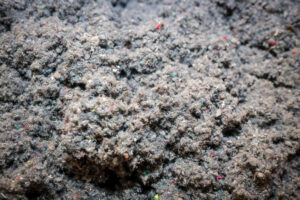
So, I was kind of panicking when it was time for me to fulfill my internship requirement. However, I found a textile recycling company that was based in New York City and it had an internship program. They weren’t doing exactly what NexTiles does, but they were recovering textiles and seeing some of the felt-based materials in the warehouse made me curious. What could those materials become? I immediately thought it looked like insulation for homes.
The internship and the master’s program ended in January of 2020, and just as I was gathering my bearings and writing my ideas down, the COVID-19 pandemic happened. That was my time to really sit down and think of all the exciting things I learned, and brainstorm a potential business model. I had time to map what it would look like to market the business, but also to do customer discovery and outreach to potential clients. It wasn’t until 2021 that I started my Ph.D. program, so the business, especially where I started to refine what an insulation product might look like, felt like a great compliment to the Ph.D. program. I didn’t know how well people at SEAS would receive the idea of the business, but I’m blessed to have started the program where people at SEAS were excited about NexTiles. They were excited about the product and able to see the synergies between the business and my research without me having to explain it to everybody.
I imagine your mom’s work probably inspired you a little bit. Tell me about that.
Well, she’s very passionate about energy and energy burdened populations of people. I knew as I was starting the business that she was going to be really interested in what an insulation product looked like; she had a lot of knowledge about what the install looks like and a lot of the information about what types of contractors would buy and install the product. These were some of the exciting discussions that we had in the house while we were quarantining.
I think her journey as an entrepreneur has had so many challenges that she was quite passionate about me experiencing my own challenges and not jumping in to shield me from all of the roadblocks and sleepless nights. So, as involved as she is, I’m grateful to her for giving me the opportunity to figure things out and build my own relationships. I think if she had tried to give me the recipe and introduce me to all of her contacts in 2020, I might not be here. But the product development journey is when I was really able to lean on her and some of her team and say, ‘Hey, how’s this type of product installed and what types of homes is it generally installed in?’ Or ‘who should I tap to pilot our product to make sure that it can be used with an insulation blower that people can rent at Home Depot?’ I wanted to make sure the product would be a good fit for a range of housing types, and she has that knowledge.
Tell me about The Shoddy Shop and what’s the demand for that kind of product?
The Shoddy Shop is our current attempt to create a retail arm for scrap leather hides, denim scraps, and other valuable scrap materials that we receive from our recycling clients. The goal is to cycle these materials back into the creative ecosystem for makers, allowing them to be used for earrings, small leather goods, shoes, and a variety of other products. We’ve started offering scrap bundles online and participating in creative markets throughout the year, so we’re excited to see how that will grow.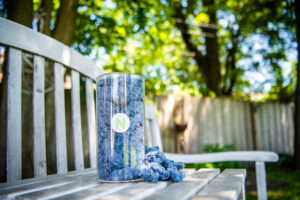
One thing that’s exciting to me is when we get a picture of a pair of moccasins or a bag that someone’s created from our scrap. It gives us confidence that what we’re doing is meaningful to people and small businesses, not just large manufacturers. The Shoddy Shop is meant to be a platform for creatives to shop and be able to use our feedstock for their unique products.
So how much of your business is insulation supply today, or The Shoddy Shop? What’s kind of the mix?
The majority of the business is automotive recycling services. For the most part, we are receiving carpet, headliner, steering, wheel, seat, and other scrap from the inside of vehicles. We also process a lot of leather from organizations that do seating for vehicles and airlines. Our primary outlets are shredded fill for furniture, outerwear, and athletic equipment. Our shoddy is used to fill these products, and of course, we sell feedstock for building insulation and other products. Companies contact us to recycle, but they also contact us for specialty fiber blends to fill their unique products. 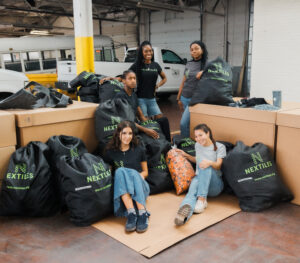
So what is next for NexTiles?
Well, for the last six months, I’ve talked a lot about NexTiles commercializing its own building insulation product, rather than just selling feedstock to other manufacturers. But, I’ve also been praying for us to have a new processing facility that is ours, and, surprise, it came and it needs a lot of work. We’re making a lot of changes to our new space, and we’ll see what that looks like over the next several months. We’ve been in the new space for just about a month and are still transitioning things from our storage site. A goal that is just as important to us as commercializing products is creating an inviting and more community-facing operation, so we’re focused on that. One of the things that I loved about the company that hosted me as an intern in 2019 is that students, youth, and elders had access to the space and were learning about the impacts of textile waste in a very hands-on way. I want our new facility to be community-facing in that way. We’ve always done tours and demonstrations, but I want us to be a real resource to our local community.