
Source: SEAS Detroit Sustainability Clinic
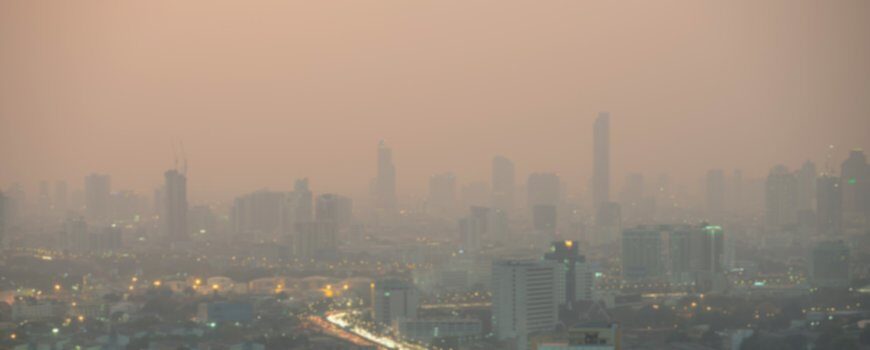
Adobe Stock.
Adobe Stock.
At 7:55 a.m., I woke up suddenly. For a moment I was disoriented. I’m not a morning person, and somehow I managed to wake up before my alarm. Then I realized why.
My bedroom smelled like smoke.
My throat stung. The air inside my apartment carried the unmistakable scent of wildfire smoke, mixed with something that reminded me of burnt spaghetti sauce and cigarettes. The day before, I knew Detroit’s air quality had deteriorated because of wildfire smoke drifting south from Ontario. What I didn’t expect was to wake up feeling like the smoke had followed me indoors.
I grabbed my phone and opened the weather app. The Air Quality Index (AQI) was approaching 500. My heart sank.
That morning, Metro Detroit briefly recorded some of the worst air quality in the world, with AQI readings climbing to nearly 600. For perspective, an AQI above 300 is considered “hazardous,” which is the highest category in the U.S. Environmental Protection Agency’s Air Quality Index.
Public health agencies consistently recommend staying indoors during these events. The problem is that this advice assumes your home can actually keep polluted air out.
For many Detroiters, home isn’t a refuge
Detroit has one of the oldest housing stocks in the country. Roughly 80% of the city’s homes were built before the 1960s, meaning many were constructed long before modern energy-efficiency standards and often have aging windows, deteriorating insulation, outdated heating and cooling systems, and other deferred maintenance.
At first glance these may seem like ordinary maintenance issues. During a wildfire smoke event, they become public health issues. When a home is poorly weatherized, air leaks through gaps around windows, doors, walls, and attics. Those same gaps can allow wildfire smoke and other outdoor pollutants to infiltrate indoor spaces.
For many Detroit residents, the situation is even more complicated during the summer. Wildfire smoke events often coincide with extreme heat, yet many households do not have air conditioning. Public health guidance tells people to keep their windows closed, but without a way to cool their homes, that isn’t always a realistic or safe option. And while portable HEPA air purifiers can improve indoor air quality, they are out of reach for many households due to their cost.
I experienced this firsthand. Despite staying indoors, my apartment continued to smell like wildfire smoke because outside air was leaking through broken windows. For many Detroit residents living in aging housing, this isn’t an isolated experience but a predictable consequence of deteriorating infrastructure.