
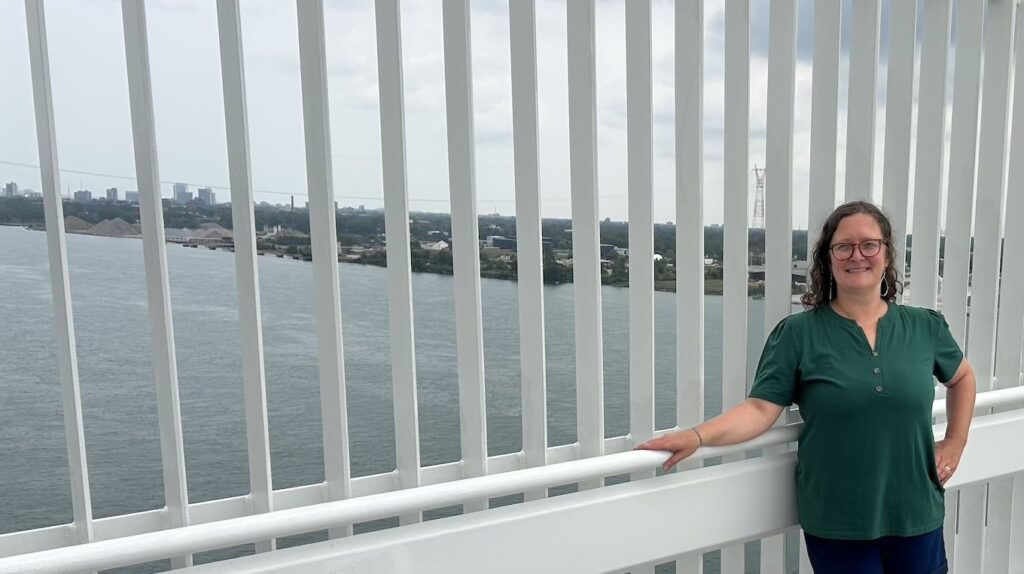
Source: UM-Dearborn
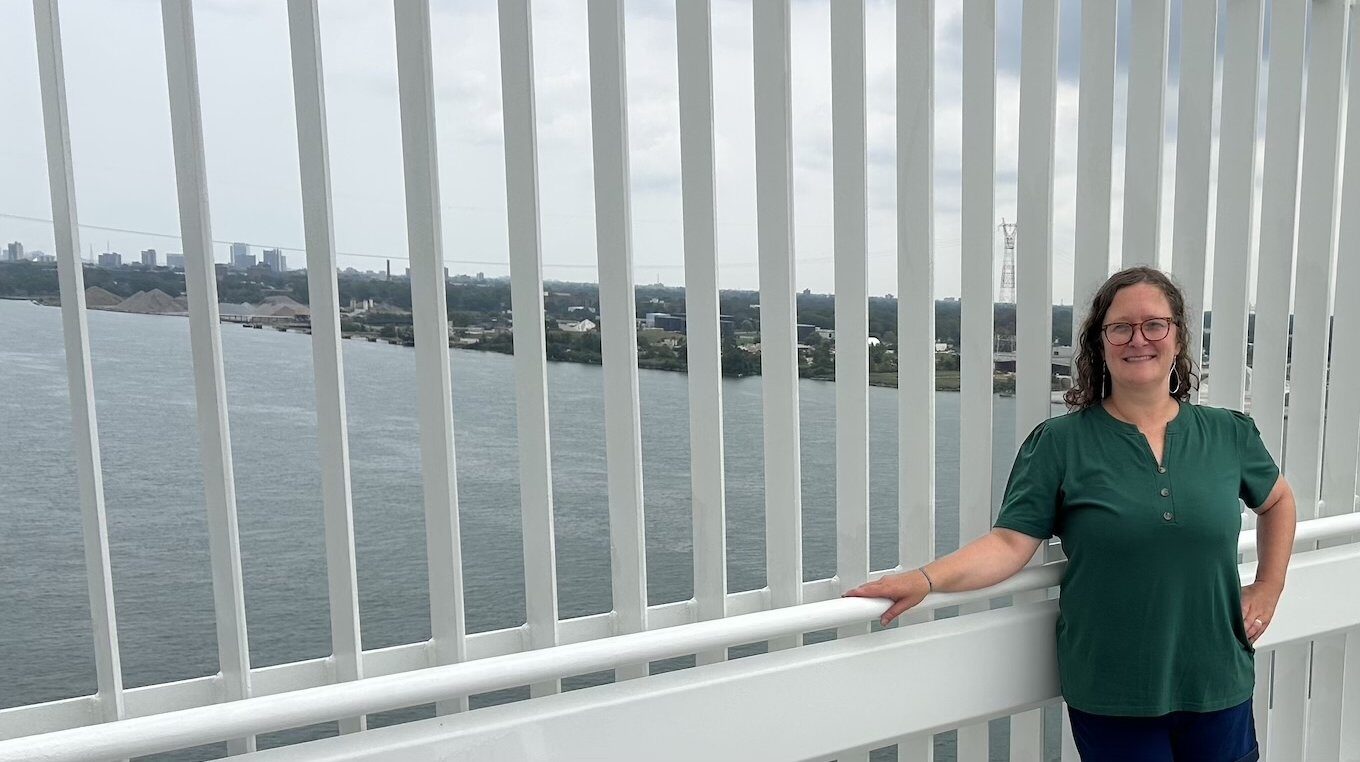
 An ongoing study — led by Detroit community leaders and public health experts, including Professor Natalie Sampson — documents the toll the recently opened bridge places on nearby residents.
The Gordie Howe International Bridge, which opened in July, creates the first direct highway-to-highway link between Ontario’s Highway 401 and Michigan’s I-75, enabling up to 26,500 vehicles to cross daily.
The span may help relieve international gridlock, but for the residents of Detroit neighborhoods near the bridge, like Delray, it is part of a much larger story — one shaped by long-standing concerns about health and quality of life.
“They’ve had to advocate for themselves starting when I-75 construction disrupted their way of life because the highway was constructed in the middle of their deeply rooted communities starting in the 1960s,” says Natalie Sampson, a professor of public health in the College of Education, Health and Human Services. “These neighborhoods noticed how their own residents were affected and advocated for cleaner air, safer streets and better health.”
With the construction and opening of the Gordie Howe Bridge, Southwest Detroit residents found themselves at another crossroads. So they looked for ways to document their neighbors’ experiences, identify needed resources and help shape policies and programs that support community health. As part of this effort, Southwest Detroit leaders and residents who live near the bridge are working with community leaders and public health experts — including Sampson — to conduct the Gordie Howe International Bridge Health Impact Assessment. The ongoing study assesses health, households and neighborhoods in Southwest Detroit before, during and after bridge construction.
“It’s important to have data that shows how people are directly affected. Otherwise their stories get lost in the overall narrative of progress,” says Sampson, who notes that asthma rates for children are 6.7% nationally but 20.4% in Detroit. “Even during the construction phase, we see even higher numbers for people who live within 500 feet of the bridge,” she adds.