
Source: Michigan News
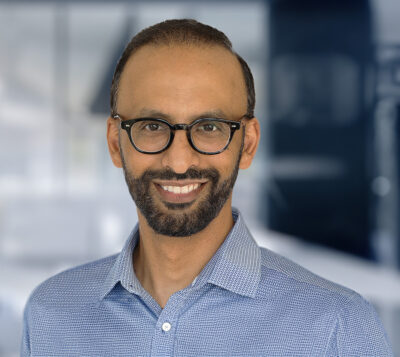
 Rishi Moudgil believes in the University of Michigan, where he earned three degrees. But just as much, he believes in philanthropy, connection, community, entrepreneurship and opportunity.
A filmmaker, entrepreneur and social sector investor who earned a BA, an MBA, and an MA in educational studies from U-M – Moudgil is now the executive director of the Michigan Founders Fund.
The fund hosts Michigan Tech Week, which takes place May 19-21 at Michigan Central. The speaker list includes a number of successful founders such as Dug Song, Branko Kerkez, Jim Adox and Zhen Xu, who share Moudgil’s love for maize and blue.
Moudgil managed the U-M Nonprofit and Public Management Center, and founded the Center for Social Impact at the Ross School of Business, now known as Business+Impact.
He was the founding executive director of GreenLight Fund Detroit before leading the Michigan Founders Fund. The fund’s mission is to “To grow the presence of successful high-growth ventures and advance civic leadership in Michigan’s entrepreneurial ecosystem.”
Those who engage with the fund – Michigan entrepreneurs and venture capitalists – take the Michigan Pledge, committing a percentage of their equity or annual carry to a grant-making fund which will support individuals and organizations in communities across the state.
Moudgil shared his thoughts on the future of the fund and why Michigan is a great place for founders.
Keeping venture capital and startups in Michigan has been kind of a hard nut to crack. What can the Michigan Founders Fund do to change that?
We exist to support high growth founders across the state, which are generally tech-driven startups. These companies have ambitions to scale and attract investment to grow quickly, and are key drivers for many of the economic indicators of a healthy and prosperous state. We support them to be successful founders that are growing here in Michigan, and also believe in giving back to the communities they are from.
So our unique model is for founders to grow both professionally and personally, as well as give back to Michigan. So whether it’s while growing their successful companies here or after they build their companies, they end up investing or being philanthropic leaders within the state.
Do you have members or how do you operate?
We have over 100 founder members that have specifically pledged to give back to their communities. Most have actually pledged equity from their companies back to us to re-grant — hence why we’re called a fund. We’re not like a traditional venture fund where we’re involved in direct investments. Rather, our fund is actually money we get back from our founders that we then grant back into the community. But this is a long-term vision, and this is a high-risk, high-reward space. So we are still figuring out how our model is going to best evolve over the long-term.
We have three main pillars of why we exist. One is to ensure the success of high-growth founders here in Michigan by creating helpful connections and support along their path. Number two is to give back and create a culture of community and purpose locally. And number three is to engage founders of all backgrounds and regions. So specifically around high growth tech and venture-backed businesses, we want to open the gates for more people to be able to participate as entrepreneurs. And so we’re really deliberate in mirroring the demographics of Michigan as a state, both in our membership and the type of programs we run, while creating better access to people who want to go down that path.
What are some of the recent developments in Detroit that have helped the fund?
Really in the last decade, venture-backed businesses have taken off in Detroit. And there’s a number of players that have really contributed to this, starting with excellent founders solving real problems. And our focus is directly on those founders who are building now. We’ve had a number of initiatives, such as new funds have come up in Detroit and new entrepreneurial support groups across the city that have had a lot of success in just a few short years. And of course, we have these new institutions. The University of Michigan Center for Innovation is coming up. Michigan Central and New Lab … It’s hard to believe it’s only a couple years old because it’s attracted so many innovative folks back here. And then we’ve had other stalwarts who’ve been here for a while, like TechTown, the Rocket Family of Companies, the Renaissance Fund, and other founder-led efforts to boost our innovation economy.
And so our job is to leverage all of these different types of resources, find founders who are really committed to building, provide them support and density amongst each other, and then also give them an avenue to give back to the communities that they’re from.
So are there founders who you know from U-M, from your U-M days?
Yes. It’s funny now because so many founders are my friends or ex-classmates or former colleagues, and so many have an affiliation with Michigan that propelled them forward. It’s hard to keep track if they were an alum or completed a program, or were working with one of the faculty or commercialization funds with their technology. It’s all over the map in a good way, but certainly U-M plays such a critical role in driving innovation. In fact, Michigan Founders Fund was started in Ann Arbor, as a part of the Ann Arbor Community Foundation by U-M alumni to support more founders and give back.
What are some of the things you learned at U-M that prepared you for this role?
As a student, I was an entrepreneur a few times over, and I had two worlds that really intertwined together in my time at U-M. One was just having that entrepreneurial spirit, but also literally practicing the craft of being a founder. When I was a student, U-M was one of the first, if not the first, to formally double down and commit to empowering students to be entrepreneurs.
I also came back to work at the university and give back directly to the next generation of founders. That was a strong part of my identity that I built on campus — to always consider the impact beyond myself and give back. So two strands from then that continue now in this role is this idea of how do you launch and build something effectively that is bigger than you?
And then also how do you make that work sustainable? How do you bring other folks along with you, especially who don’t always have the same access? How do you give back to the communities that helped you grow your ideas and business? I feel like that’s all part of that mission at U-M and the public ethos of the university. And that’s absolutely the DNA of what I’m trying to do.
And what does giving back look like for the Michigan Founders Funds in terms of who you give to and what your annual giving looks like?
So we’re in the middle of redefining our next stage of giving back currently, but one key focus area is supporting underrepresented entrepreneurs. So for example, we’ve started specific programming for founders who don’t typically have the capital and access to resources needed for their companies to take off at certain stages. We also work across the board with our entrepreneurs on how they think about hiring locally or building locally, such as growing their manufacturing base or technology right here. We also want our founders to use their voice to advocate for each other and causes they care about. So we go beyond some traditional realms to consider how to support the entire Michigan ecosystem.
And then of course, we have a number of founders who’ve literally pledged part of their future sale or exit back to us for philanthropic giving. And so that’s a long-term goal to build upon. It takes years and years before hitting that exit, but we work with our founders to start thinking about how they can be philanthropically engaged, given that many of them have already committed to giving back even before they’ve reached traditional success.
At what stage should a startup be at before they look to the Founders Fund for assistance?
Our core members are actively building rapidly, fundraising risk capital, or scaling their business. So we’re working with post-idea stage, and post prototype founders with high-growth ambitions. Once the business is ready to start actually selling or fundraising to take off, that’s our sweet spot. And over time, we have founders from pre-seed stage all the way into series A, B, C … in our fundraising parlance, if you will.
So what would you like to grow this into?
One of the things we’re working on right now is how we can continue to make Michigan even more founder-friendly and founder-centered, and how we build not only the economic opportunities, but also leadership opportunities. So many of our founders are not just launching companies, but they’re leaders in their communities and future leaders for all of us. So I’m really looking forward to working alongside this next group of founders to really be key nodes of prosperity and success in the places where they’re from. We have founders all across the state, certainly metro Detroit, both the west side of the state, up north and otherwise. And it’s so great to see how much passion they have, not only to build their business, but to positively lift those communities they’re from. So we want to really demonstrate more deliberately how these founders have such an impact where they’re from. To highlight how high-growth startups really make an outsized difference because they are one of the key drivers for net new jobs, net new revenue and prosperity in their communities.