
Source: School of Public Health
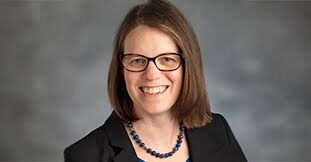
Carina Gronlund
Carina Gronlund
On a sunbaked summer afternoon in Detroit, the difference between cool shade and hot asphalt pavement is more serious than you might think.
Carina Gronlund knows this better than most. As an environmental epidemiologist at the University of Michigan School of Public Health and Institute for Social Research’s Survey Research Center, she’s spent years unraveling how the weather, air quality and housing shape the daily lives—and risks—of people across Michigan.
Gronlund started her career managing cancer data in Detroit, where she witnessed how disease often arrived after years of harmful exposures—long after prevention was possible.
“I was very interested in this push and pull between the economic growth and jobs for the middle class that the auto industry has traditionally provided, and then the environmental consequences of that industry and its industrial emissions,” she said. “And, I would also say the environmental justice issues, around industrial practices in the United States and globally. Then, I discovered that there was this discipline called environmental health that perfectly captured those instances.”
Gronlund looks at neighborhoods, policies and weather patterns alongside patient data. Guided by environmental epidemiologist Marie O’Neill, professor of Environmental Health Sciences and Epidemiology, Gronlund began focusing on how extreme heat threatens vulnerable communities—a challenge that’s growing as environmental conditions shift.
With support from the National Institutes of Health (NIH), the National Science Foundation and the Graham Sustainability Institute, Gronlund leads a portfolio of projects that combine boots-on-the-ground fieldwork with innovative data analysis.
She collaborates with Detroit community groups and state officials to study how social, economic, health and built environment factors—like poor housing or high utility costs—can multiply the risks posed by extreme heat, precipitation, pollen and wildfire smoke. Her research ranges from evaluating how energy-efficient home improvements boost sleep and cognitive health for older adults, to mapping the patterns of allergy and asthma attacks as pollen levels rise across the Midwest.
“One way I describe public health is figuring out how to keep people out of emergency rooms,” Gronlund said. “We want to prevent you from getting that health problem in the first place. Or at least minimize it so that you can live a full life, and, for all that life, do the things that you feel are productive and meaningful to you.”
For Gronlund, it’s about helping cities adapt, closing gaps in health equity, and empowering people to thrive, no matter what the forecast brings.