
Source: School of Public Health
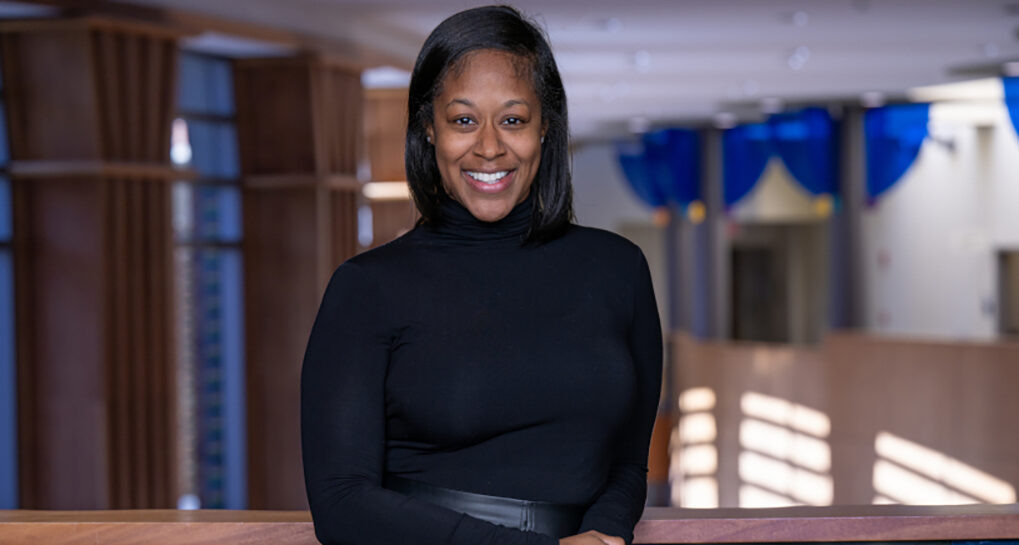
School of Public Health portraits November 8, 2024.

School of Public Health portraits November 8, 2024.
For Micah Aaron, BS ’13, MPH ’15, growing up in Detroit and later moving to nearby Farmington Hills taught her an early lesson about inequality and helped shape her career studying healthcare systems.
As an undergraduate at the University of Michigan, Aaron worked in a motor control lab helping disabled populations. While she loved the research, she realized clinical medicine wasn’t her calling. Instead, she found her passion in studying how healthcare systems can work better for everyone. After earning her Master of Public Health from the School of Public Health, she spent two years at Trinity Health learning how large hospital systems operate before pursuing her PhD at Harvard University.
Today, Aaron is an assistant professor of Health Management and Policy at Michigan Public Health, driven by a simple but powerful goal: ensuring patients get the best possible care for the money spent.
Aaron’s work reflects both her Detroit roots and her family’s labor union background, which taught her that meaningful change happens through multiple approaches—from political engagement to scientific research. Now, she’s applying that same principle to healthcare reform, using data and analysis to advocate for a system that works better for everyone.
What is your main area of research and drew you to work in that area?
My research, which is dually motivated by current health reform efforts and by my formative professional experience at a large, vertically integrated health system, seeks to clarify the relationships between costs, quality and integration within the U.S. healthcare system.
This work is of particular interest to me because it combines my public health passions with a tangential interest I possess in policy development, particularly the practice of influencing the legislative process through active political engagement. My dad has operated the state’s largest labor union in downtown Detroit composed exclusively of road construction and building trades workers for the last 30-plus years and was recently joined by my sister.
Together, they advocate for sustainable and livable wages and adequate fringe benefit packages for a diverse population across the state of Michigan. Through my involvement in labor union activities including political candidate vetting/forums/fundraisers, picket lines, and political party conventions, I came to understand that one can contribute to change on a broader scale using multiple avenues: by engaging in the political process (e.g. through voting and propping up like-minded political candidates) and through more grassroot efforts (e.g. peaceful protests and picket lines). In my public health work, I continue with this principle of active engagement to influence policy through my evaluation work of health policy and research efforts which both aim to generate new knowledge to inform health care legislation.